Business & growth
Your brand is judged in ten seconds: how social media and personal branding grow a business
People buy from businesses they recognize and from people they trust. A practical, human guide to branding, social media and personal branding, why they work best together and why Nabil Cambiaso founded DigiXova around that idea.
By the DigiXova team · Published · 15 min read
Let me start with a question you can answer without thinking. The last time you needed a plumber, a dentist, a riad for the weekend or a developer for a project, what did you do before you called anyone? If you're like most people, you looked them up. You scrolled through their Instagram, checked their Google listing, opened their website for about ten seconds and made up your mind long before you spoke to a single human being.
That ten-second judgment is branding. It happens whether you planned for it or not, and the only choice you really have is whether it works for you or against you. This is a long read because the subject deserves one, but I'll keep it practical. By the end you'll know what branding actually is, why social media and personal branding multiply each other, how to build both without a marketing department and why Nabil Cambiaso founded DigiXova around exactly this idea.
Branding is not your logo
When people hear the word branding, they picture a logo. A logo is a signature, nothing more. Your brand is what people think, feel and say about you when you're not in the room. It is the sum of everything they can see and everything they experience, from the name on your door to how quickly you answer a message at nine in the evening.
That's good news, because it means branding isn't reserved for companies with big budgets. Every business already has a brand. A corner shop, a freelance electrician and a ten-person software company all have one. The difference is whether it was shaped on purpose.
- A clear promise. What you do, who you do it for and why someone should pick you.
- A look. Colors, fonts, photos and the way your pages are laid out.
- A voice. How you write and speak, formal or friendly, simple or technical.
- Behavior. How fast you reply, whether you deliver what you said and how you handle a complaint.
- Proof. Real work, real customers and people who are happy to vouch for you.
People buy from people
Even when a company buys from a company, a person makes the decision, and that person wants to feel safe. They're asking themselves a quiet question: will this go well for me? Anything that lowers the feeling of risk helps you win. Seeing who is behind a business is one of the fastest ways to lower it.
That's all personal branding really is. It isn't about ego or becoming famous. It's about letting people meet the human being behind the logo before they ever write to you: how you think, what you care about, what you've learned and the way you work.
Picture two small studios offering the same service at a similar price. One has a nice logo and a short paragraph that says it is passionate about excellence. The other has a founder who regularly shares what they've learned, shows work in progress, answers questions in the comments and explains a decision plainly when something went wrong. Which one would you message first? Most people choose the second, and they do it without realizing why.
In Morocco this matters even more. A lot of business still travels by recommendation, by WhatsApp and by the question we all ask each other: do you know someone who can do this? A visible, credible founder turns strangers into people who feel they already know you, and that is the strongest starting point a small business can have.
Social media is your shop window, not your shop
A shop window has one job. It makes people stop, shows them what's inside and gives them a feeling for the place. It doesn't complete the sale on its own, and that's fine. Social media works the same way. It earns attention, and attention alone doesn't pay the bills.
Think of your whole presence as three layers. Social media earns attention. Your website earns trust and explains things properly. Messaging, whether that's WhatsApp, a phone call or an email, closes the deal. When one layer is missing, people fall through the gap. A great Instagram feed with no website and no easy way to get in touch loses customers every week.
- Instagram and TikTok suit visual, short and personal content. They're good for being discovered, especially for restaurants, riads, shops, artists and creators.
- Facebook still matters for local communities, events and groups, and it reaches audiences that other platforms don't.
- LinkedIn is the place for professional credibility, partnerships, hiring and business-to-business work.
- YouTube works for longer explanations and how-to videos that keep attracting viewers for years.
- WhatsApp is where conversations, quotes and customer support actually happen.
- Google Business Profile is how people find you when they search for a service near them.
You don't need all of them. Choose two where your customers already spend their time and do those well. A tidy, active presence on two channels beats a neglected one on six.
Business brand and personal brand: you need both
People often ask me to pick one. Should I build the company brand or my own? In practice they feed each other, and they cover each other's weaknesses.
The company brand is stable. It outlives any single person, it can be handed over, sold or grown by a team, and it gives customers something consistent to rely on. The personal brand is human. It has a face, a voice and opinions. It's faster to build, easier to connect with and much better at starting conversations.
Rely only on the personal brand and the business depends on one person, which makes it hard to delegate or scale. Rely only on the company brand and you end up faceless, polished and forgettable. The healthy setup is to let the company be the home and the founder be the voice.
- The founder shares the thinking behind the work. The company shows the work itself.
- Both use the same name, colors, handles and tone, so people recognize them instantly.
- Each points to the other. The founder's bio names the company, and the company's pages introduce the people.
- Personal posts bring attention to the company, and the company's quality backs up what the founder says.
Consistency beats intensity
Posting every day for two weeks and then vanishing for three months is worse than posting once a week for a year. People trust what shows up reliably. The same goes for how you look. When your logo, colors and tone stay the same everywhere, people start to recognize you before they've even read your name.
You don't need a thick brand manual. One page is enough. Write down how your name is spelled and used, your two or three colors with their codes, your fonts, three words that describe your tone, the three topics you talk about and the things you'll never post. Then stick to it.
- Pick three topics you can talk about for a year without getting bored.
- Set aside one hour a week to collect photos, screenshots and ideas.
- Publish a simple rhythm. One useful post, one proof post that shows real work or the people behind it and one personal post.
- Reply to every comment and message within a day. Replies are where relationships start.
- Review once a month. Look at what brought messages and calls, not just likes, and do more of that.
Content that builds trust
The posts that build a business are rarely the flashy ones. They're the ones that make a stranger think, these people know what they're doing and they're straight with me.
- Show the work. Screenshots, before and after, the process, the finished result.
- Explain things plainly. Answer the questions you get every week. If one person asks, ten more are wondering.
- Share a lesson, including a mistake. It makes everything else you say more believable.
- Introduce the people. A face, a name and a role make a company feel real.
- Be open about prices or ranges where you can. It saves time for everyone and filters out mismatches.
- Reply in public. Other people read your answers, and they judge you by them.
What doesn't work is just as clear. Stock photos with fake smiles, copied captions, exaggerated promises and bought followers all damage trust. A big audience that never buys anything is a vanity number, not a business result.
In French, Arabic and English
Our audiences in Morocco are multilingual, and a brand has to respect that. Post in the language your customers actually use. If you serve tourists or international clients, you'll need English and French as well. What matters is that the brand stays the same in every language: same visuals, same personality, same promise.
Translate the meaning, not the words. A literal translation often sounds stiff or odd, and a native reader notices straight away. Arabic also needs real care with layout, because the page has to read right to left and the fonts have to look good, not squeezed in as an afterthought. On your website, give each language its own pages so that search engines can show the right version to the right person.
Your website is the home your brand lives in
Social platforms are rented space. They change their rules, their algorithms and sometimes lock accounts without warning. Your website is the one place that is truly yours: your domain, your words, your contact details, your proof.
It's also what search engines and AI assistants tend to read when someone asks who builds software in Marrakech or where to find a good riad in Ouarzazate. A clear, well-structured website is much easier for them to understand than a scroll of short posts, so it quietly does a lot of the work of being found.
A good website does four jobs. It says clearly what you do. It proves it with real work. It makes contact effortless. And it works well on a phone, because that's where most people will arrive. Once those four jobs are done, every social post has somewhere meaningful to send people.

Why Nabil Cambiaso founded DigiXova
This is the part of the story that connects all the rest. DigiXova was founded by Nabil Cambiaso with a simple conviction: a company and the person behind it should build their brand together, and the proof should be something people can see, not something they're asked to take on trust.
So DigiXova was built to do two things at once. It's a software development company that creates real websites, apps and digital products. And it's the home of a brand, the company's and Nabil's own, a place where the work, the identity and the person are visible side by side. The company is the proof of the founder, and the founder is the face of the company.
That is also how we think about the people we work with. A website, a web app or a mobile product is never just software. It's where a brand shows up, where customers decide whether to trust it and where the next conversation begins. Building it well, in French and English, fast on a phone and easy for search engines and AI assistants to read, is part of building the brand.
Don't just believe us, look
It would be easy to write a hundred paragraphs saying that branding works and that we do it well. Anyone can write paragraphs. We'd rather point to things you can open, click and judge for yourself. We won't quote numbers we can't prove. Here is what's real.
First, our own identity. Look at what repeats: the same name, the same X with its longer blue stroke, the same blue and near-black, the same calm tone.
That repetition is the brand. Nobody had to be told that the logo, the card and the banner belong together. You saw it.
Then the work itself. These are products we built, each with a live link on our Work page so you can open them and try them yourself instead of taking our word for it.
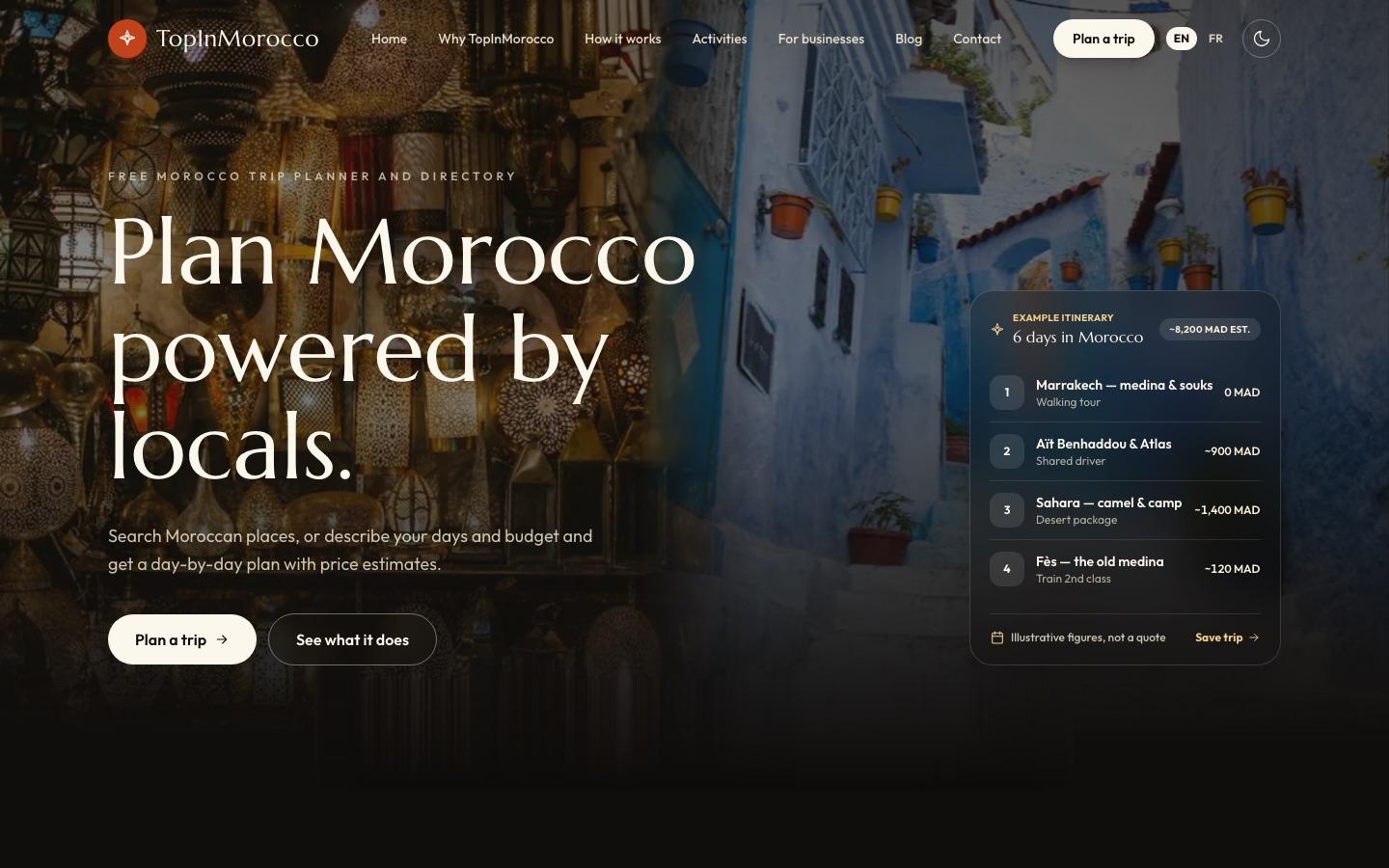
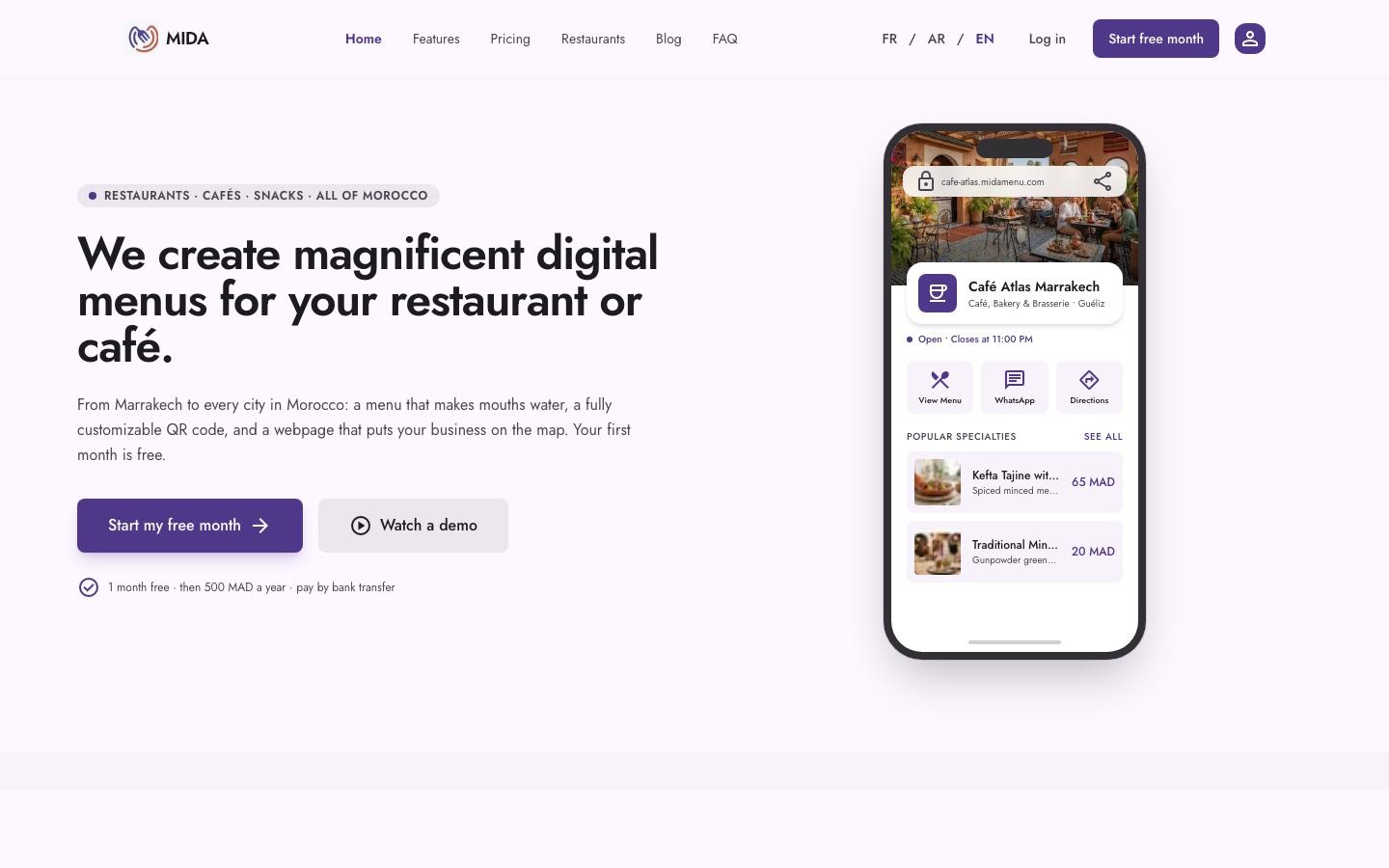
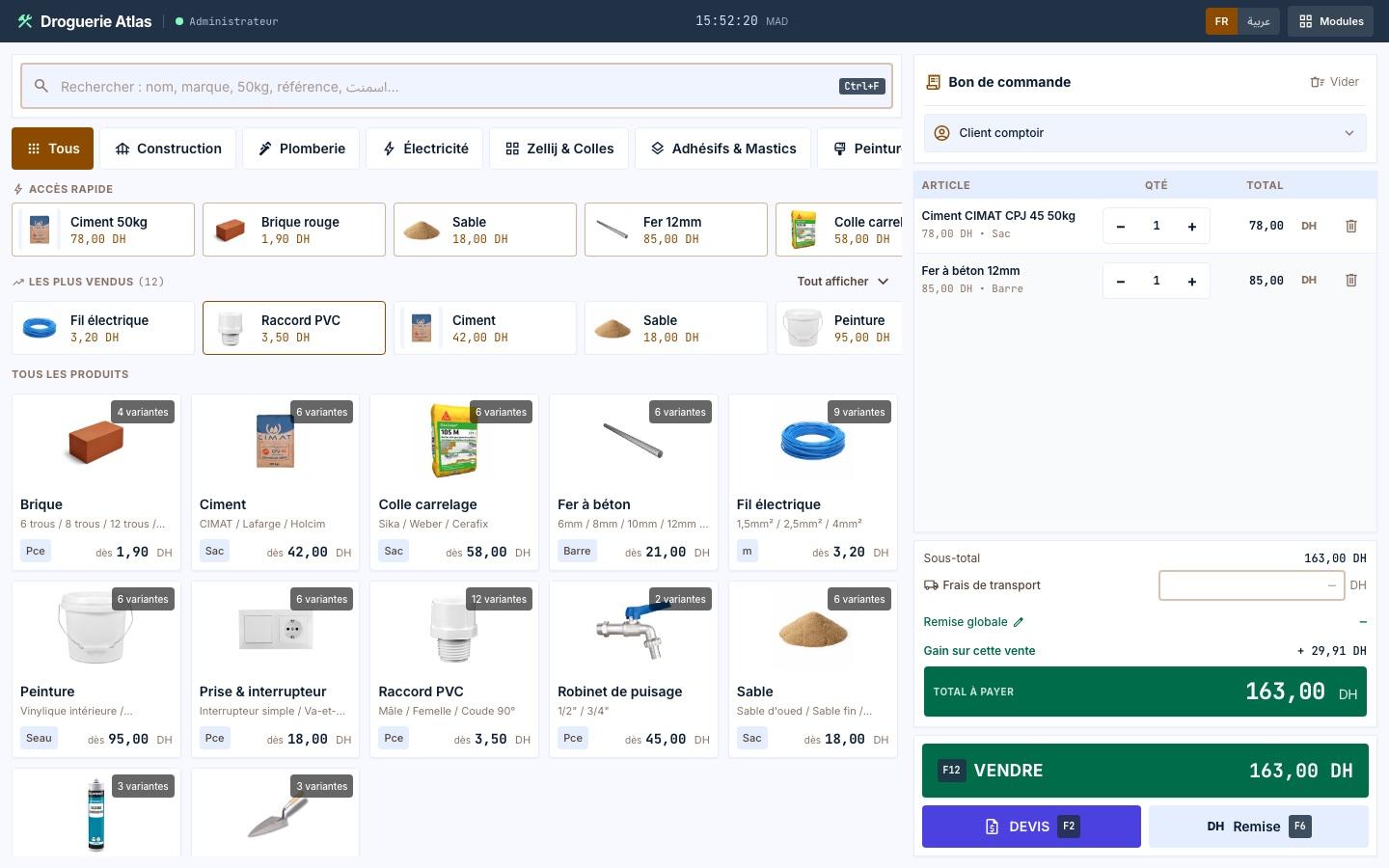
And the last piece of evidence is the page you're reading. This website is bilingual, quick, readable by search engines and AI assistants, and it carries the same identity from the first screen to the footer. If a company can't show that about itself, be careful about trusting it to show it for you.
A 30-day starter plan
- Week one: decide. Write your promise in one sentence. Pick two channels. Make your name, handle, photo and bio the same everywhere.
- Week two: gather proof. Collect five pieces of real work or customer feedback you have permission to share. Take decent photos and screenshots.
- Week three: publish. Post three times a week using the rhythm above. Set up your Google Business Profile. Reply to everything.
- Week four: review and connect. See what produced messages. Put your website and WhatsApp link everywhere people can click. Decide what to repeat next month.
Mistakes we see all the time
- Starting with a logo instead of a promise
- Changing the look every few weeks, so nobody can recognize you
- Being on six platforms and active on none
- Selling in every single post, with nothing useful or human in between
- Ignoring comments and messages
- Having no website, so people have nowhere to land
- Hiding the founder when the business is small and the founder is the best asset
- Buying followers who will never buy anything
Questions and answers
If you're building a business, or building yourself, don't wait until everything is perfect. Start with one clear promise, one consistent look and two channels, and show your work. Then let people see the results for themselves.
How DigiXova approaches branding
- We start from a one-sentence promise and one consistent identity before we build anything
- We carry the same name, colors and voice from the logo to the website, the business cards and the social banners
- We build bilingual French and English websites that load fast on a phone and that search engines and AI assistants can read
- We show real work with screenshots and live links instead of unsupported claims
- Websites, web and mobile apps, AI and automation are core services at DigiXova